
ERPC Launches Multi-Region Shared Shredstream Bundle Plan for Solana. A Simple Way to Achieve Global Low-Latency Coverage
ERPC Launches Multi-Region Shared Shredstream Bundle Plan for Solana. A Simple Way to Achieve Global Low-Latency Coverage
ELSOUL LABO B.V. (Headquarters: Amsterdam, the Netherlands, CEO: Fumitake Kawasaki) and Validators DAO have announced the launch of the Shared Shredstream Bundle plan for ERPC, enabling Solana developers to use Shared Shredstream across multiple regions under a single subscription.
For Solana applications, performance and stability are determined not only by code or RPC tuning but also by which region’s Shreds you can access and how close they are to your users.
Until now, Shared Shredstream was commonly used in a single region, but as applications scale globally, the need to consume Shreds from several regions at once has rapidly grown.
To address this demand, ERPC is introducing a new multi-region Shared Shredstream Bundle.
Until now, Shared Shredstream was commonly used in a single region, but as applications scale globally, the need to consume Shreds from several regions at once has rapidly grown.
To address this demand, ERPC is introducing a new multi-region Shared Shredstream Bundle.
Key Characteristics of Shared Shredstream
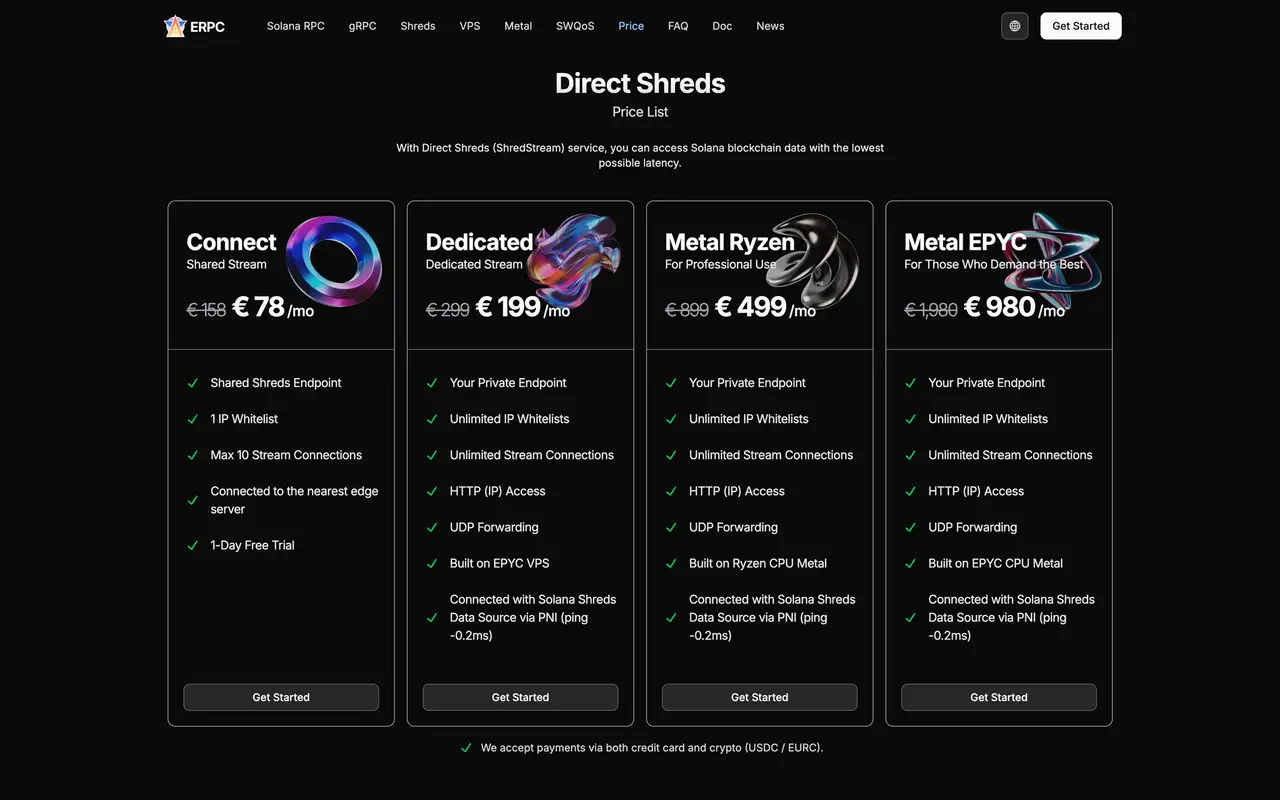
Shredstream delivers the same Shreds that Solana nodes propagate to one another at the moment of data transmission.
Instead of receiving data after a node processes it and then exposes it via gRPC or RPC, Shredstream accesses data at the same propagation layer, allowing clients to obtain information one stage earlier than Geyser gRPC.
Instead of receiving data after a node processes it and then exposes it via gRPC or RPC, Shredstream accesses data at the same propagation layer, allowing clients to obtain information one stage earlier than Geyser gRPC.
As a result, data updates arrive faster, timing jitter is minimized, and overall responsiveness improves.
Even as a shared service, ERPC automatically routes clients to the nearest regional edge, reducing geographic disadvantages that are common among providers that rely on a single Shreds origin.
Even as a shared service, ERPC automatically routes clients to the nearest regional edge, reducing geographic disadvantages that are common among providers that rely on a single Shreds origin.
Why Multi-Region Shreds Matter: Solana’s Leader Rotates Globally
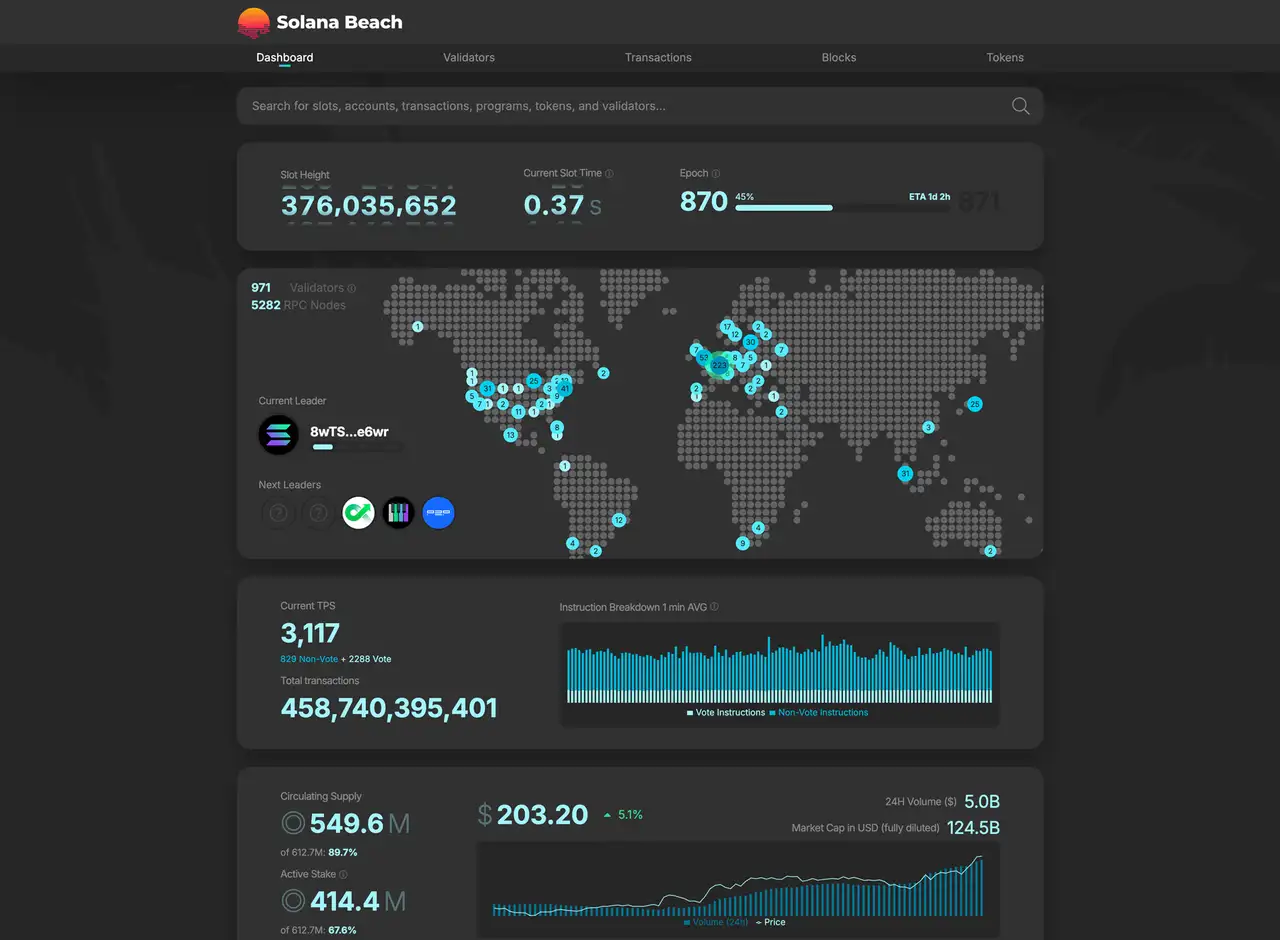
Solana’s leader slot rotates across the world, meaning the region with the lowest-latency data changes throughout the day.
A single-region setup may be fast during certain hours but becomes structurally disadvantaged during others as the leader moves farther away.
A single-region setup may be fast during certain hours but becomes structurally disadvantaged during others as the leader moves farther away.
Additionally, Shreds differ by region because each area propagates distinct data streams.
A provider that only uses Frankfurt-origin Shreds will inherently disadvantage users in Asia or North America.
A provider that only uses Frankfurt-origin Shreds will inherently disadvantage users in Asia or North America.
ERPC’s Shared Shredstream retrieves local origin Shreds in each region — Asian Shreds in Asia, North American Shreds in North America, and so on.
This approach ensures the lowest possible latency for each geography and minimizes the impact of time-zone-based leader rotation.
This approach ensures the lowest possible latency for each geography and minimizes the impact of time-zone-based leader rotation.
Multi-Region Coverage Dramatically Improves User Experience
Latency is directly tied to physical distance.
Having a Shredstream presence near end-users results in a dramatic improvement in UX.
Having a Shredstream presence near end-users results in a dramatic improvement in UX.
This is especially critical for Asia (Tokyo and Singapore), which is geographically the farthest from both Europe and North America.
Typical ping times from Western regions to Tokyo are 100–200 ms, creating unavoidable latency disadvantages.
Typical ping times from Western regions to Tokyo are 100–200 ms, creating unavoidable latency disadvantages.
With Shared Shredstream Bundle, Shreds for Asia are obtained within Asia, greatly improving update speed, delivery latency, and application responsiveness.
For Web3 services with a globally distributed user base, this improvement directly translates into better UX and fairness across regions.
For Web3 services with a globally distributed user base, this improvement directly translates into better UX and fairness across regions.
Shared Shredstream Bundle Overview
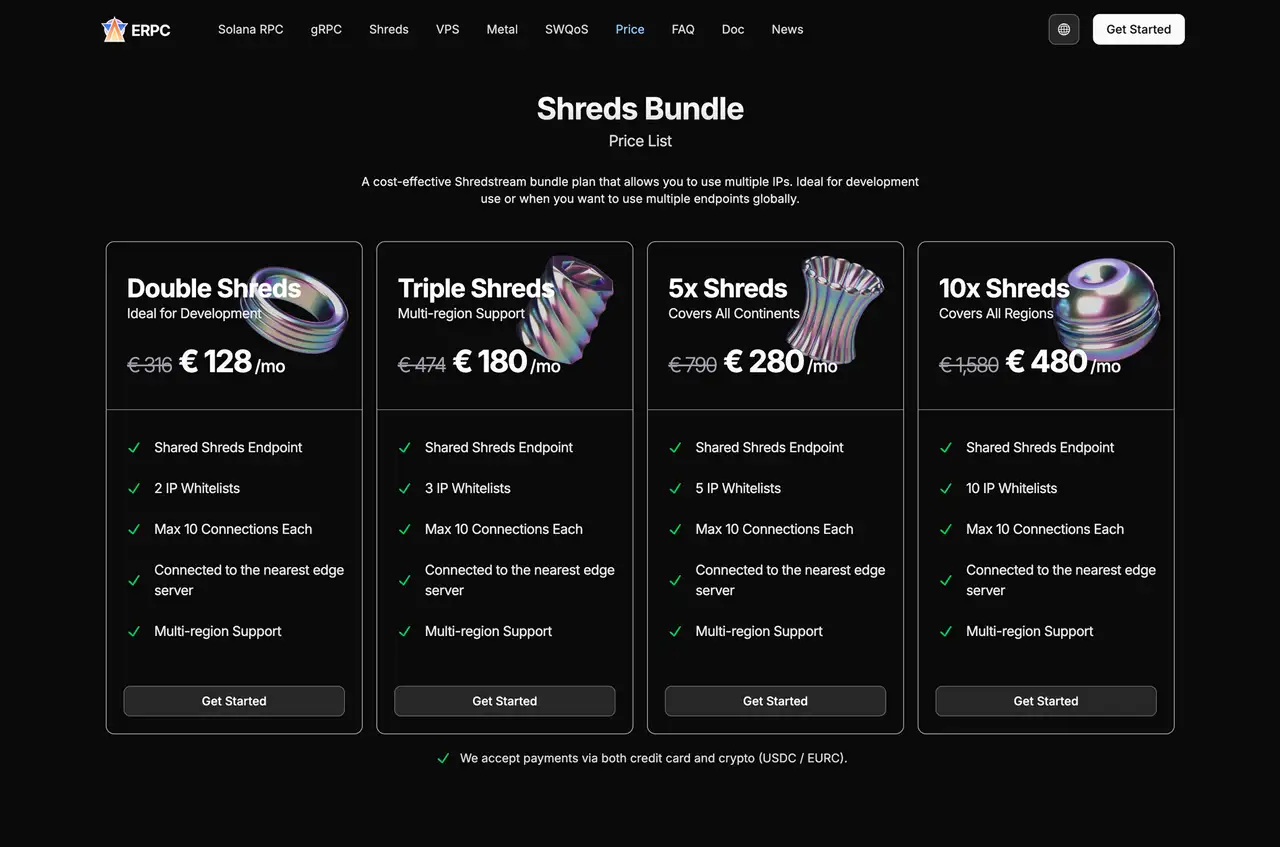
The Shared Shredstream Bundle provides access to multiple regional Shared Shreds streams under a single plan, enabling a far more cost-efficient setup than contracting individual regions separately.
All Bundle plans include shared Shreds endpoints, 10 connections, IP allowlisting, and automatic routing to the nearest edge location — achieving both low cost and practical global coverage.
-
Double Shreds
2 regions. Ideal for development or small production environments. -
Triple Shreds
3 regions. Suitable for covering EU / US / APAC simultaneously. -
5x Shreds
5 regions. Designed for globally deployed production workloads. -
10x Shreds
10 regions. Full global coverage for large-scale services and analytical workloads.
Applications are accepted via Validators DAO’s official Discord.
Validators DAO Official Discord: https://discord.gg/C7ZQSrCkYR
Challenges Addressed by ERPC, SLV, and Validators DAO — and Our Future Direction
- Transaction failures and latency fluctuations common with RPC
- Performance limitations and over-commitment at many infrastructure providers
- Fundamental latency issues caused by geographic distance and network structure
- Unequal access to high-quality Solana infrastructure depending on project size
The insights gained during the development of the Solana NFT card game Epics DAO have shaped ERPC, SLV, elSOL, Epics DAO, and Validators DAO.
We will continue strengthening our global infrastructure — including support for next-generation technologies such as Alpenglow — to improve performance and developer experience across the Solana ecosystem.
We will continue strengthening our global infrastructure — including support for next-generation technologies such as Alpenglow — to improve performance and developer experience across the Solana ecosystem.
- ERPC Official Site: https://erpc.global
- SLV Official Site: https://slv.dev
- elSOL Official Site: https://elsol.app
- Epics DAO Official Site: https://epics.dev
- Validators DAO Official Discord: https://discord.gg/C7ZQSrCkYR
News